Before paper and ink became cheap, people in China tied cords to remember. A knot could mark a debt, a promise, a journey, or a prayer. Over centuries, those practical cords loosened into decoration — but they never lost their meaning.
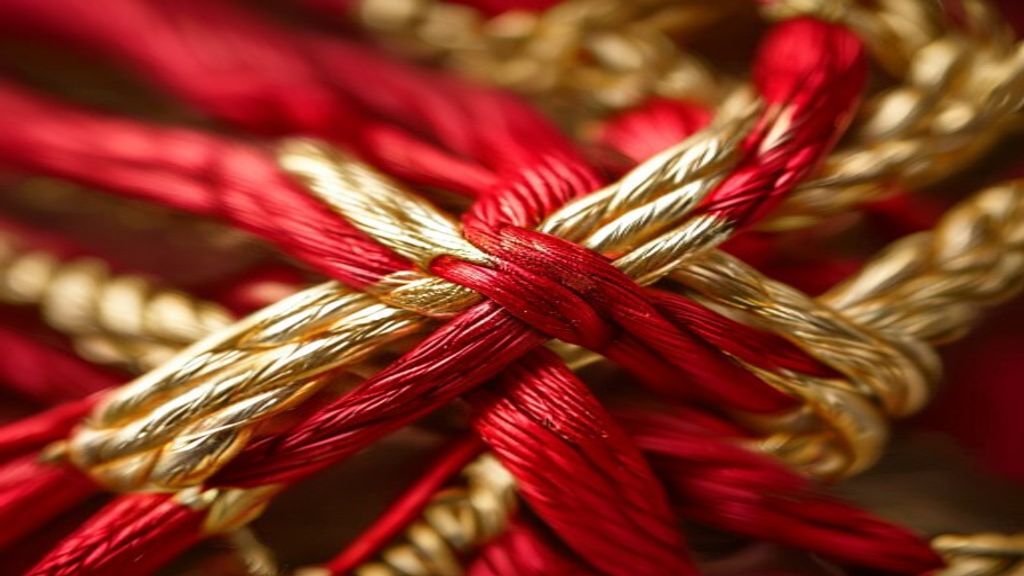
Today, Chinese knots hang in doorways, cars, and gift boxes. They are bright red, sometimes gold, always symmetrical, and almost always carrying a wish.
From record to ornament
Some of the oldest Chinese records were knotted cords. Before writing, officials tied different knots to keep accounts of population, taxes, and events. The Book of Changes even mentions that "in ancient times, people knotted cords to govern."
By the Tang and Song dynasties, knotting had become an ornamental art. Court ladies wore knotted sashes, and scholars recorded dozens of decorative patterns. The craft reached a high point during the Ming and Qing dynasties, when every region developed its own styles.
The language of knots
A Chinese knot is rarely just a knot. Its shape, color, and accompanying charms form a sentence:
- Red color: joy, luck, and protection
- Gold color: wealth and prosperity
- Endless knot: longevity and eternal blessings
- Double coin knot: wealth and success
- Butterfly knot: love and happy marriage
- Tassel: continuity and flowing fortune
When a knot is combined with a jade disc, a small gourd, or a fu character, the meaning becomes even more specific. A red knot with a fish may mean "surplus year after year." A knot with a lotus may mean "continuous harmony."
How a knot is made
Traditional Chinese knots are made from a single length of cord, folded and looped without cutting. The process requires patience: one mistake early on can undo the whole pattern. Master knotters work by feel, tightening the cord gradually so that the knot keeps its shape and tension.
Modern makers often use satin cord for its shine, but silk and cotton remain traditional choices. The finished knot is stiffened, sometimes with starch, so it keeps its elegant form.