In Chinese villages, a newborn's first shoes were rarely bought from a shop. They were sewn by grandmothers and aunts: tiny cloth shoes with round tiger faces, bright embroidery, and hidden wishes for health and courage.
This is cloth folk art — not the silk robes of emperors, but the patchwork, embroidery, and stitching that ordinary families used to turn everyday objects into blessings.
Cloth as protection
For centuries, Chinese families believed that infants and children were vulnerable to evil spirits and illness. The solution was not just medicine but symbolism. A tiger, the king of beasts, could frighten away harm. A sachet filled with fragrant herbs could purify the air around a child. An embroidered pouch could carry a prayer.
So cloth became armor. Babies wore tiger hats and tiger shoes. Pregnant women carried embroidered sachets. Brides received quilts covered with symbols of fertility and long life.
"A needle and thread can speak louder than words when the words are wishes for a child."
The tiger shoe
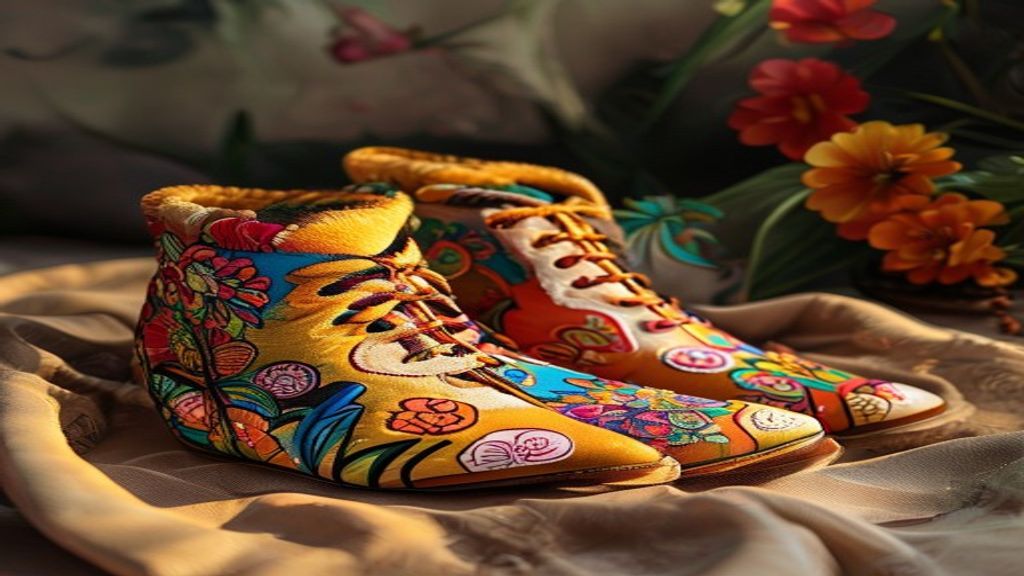
Tiger shoes, or laohu xie (老虎鞋), are the best known example. The front of each shoe is shaped and embroidered to look like a tiger's face: round eyes, a broad nose, whiskers, and sometimes small ears sticking up.
The tiger was chosen because it was fierce enough to protect the child and noble enough to bring dignity. In some regions, the first pair was made before the baby was born, as a gift from the maternal grandmother. The shoes were too small to walk in for long, but that was not the point. They were a portable blessing.
Sachets and scent
Embroidered sachets, or xiangnang (香囊), were another common cloth art. They were small pouches, often shaped like animals, flowers, or gourds, filled with dried herbs such as mugwort, cinnamon, and cloves.
During the Dragon Boat Festival, families hung sachets on children's clothing to protect them during the summer months. Lovers also exchanged sachets as tokens. A well-made sachet showed patience, skill, and affection.
Regional styles
Different regions developed their own cloth traditions:
- Northern China: bold tiger shoes and patchwork quilts using strong primary colors
- Jiangnan: delicate silk embroidery on sachets and handkerchiefs
- Shaanxi: bright, geometric applique work influenced by paper cutting
- Guizhou: indigo-dyed cloth with wax-resist patterns made by Miao communities
Each style used local materials and local beliefs, but the purpose was the same: to wrap the people you loved in beauty and protection.