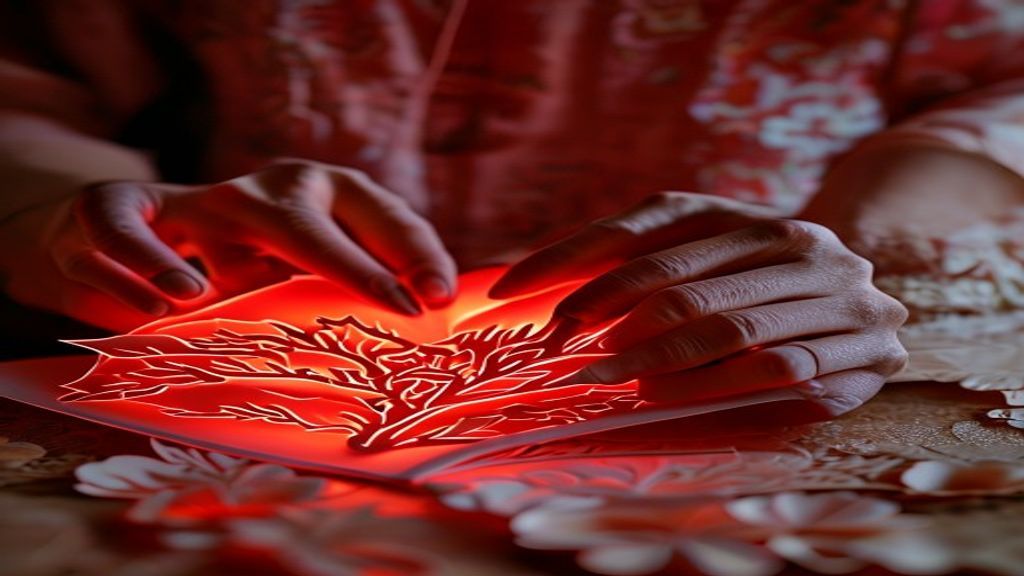
Every paper cutting hanging in a Chinese window is more than decoration. It is a wish made visible. For centuries, rural families used a small set of symbols to send messages about health, wealth, love, and long life.
Understanding these symbols is the fastest way to read a paper cutting.
Why symbols matter
Chinese folk art loves puns. Many symbols were chosen because their names sound like lucky words. A bat, fu (蝠), sounds like blessing, fu (福). A fish, yu (鱼), sounds like surplus, yu (余). These sound-alikes turned simple images into spoken prayers.
Other symbols came from nature, history, or myth. Together they formed a visual language that anyone in the village could read, even without formal schooling.
Eight common motifs
-
The Bat (蝠) — Blessing and good fortune. Five bats together mean "five blessings": longevity, wealth, health, virtue, and a peaceful death.
-
The Fish (鱼) — Abundance and surplus. A common New Year wish is "may you have surplus year after year."
-
The Peony (牡丹) — Wealth, honor, and feminine beauty. It is known as the king of flowers in Chinese culture.
-
The Peach (桃) — Long life and immortality. Peaches of immortality appear in many myths about the Queen Mother of the West.
-
The Pomegranate (石榴) — Fertility and many children. Its many seeds symbolize a large family.
-
The Mandarin Duck (鸳鸯) — Faithful love and marriage. Pairs of ducks often appear in wedding decorations.
-
The Dragon and Phoenix (龙凤) — Cosmic balance. The dragon represents yang, the phoenix represents yin. Together they symbolize a harmonious union.
-
Double Happiness (囍) — Marriage and joy. This character, doubled for emphasis, is the most common wedding symbol in China.
Once you know these eight symbols, you can walk through a village at festival time and read the walls and windows like a book of good wishes.